

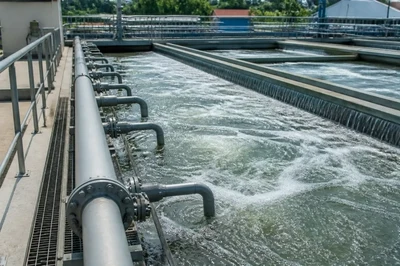

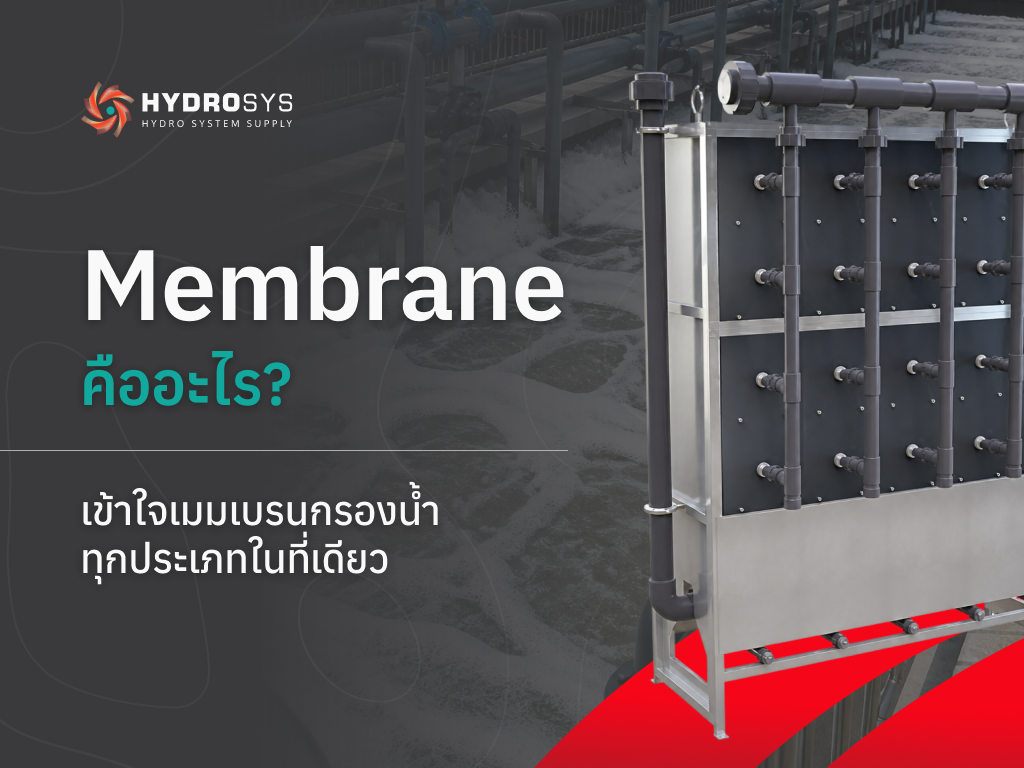
A membrane is a special filtration barrier that uses pressure to separate contaminants, bacteria, and molecules out of water without chemicals. It comes in several levels of filtration, from MF for fine solids all the way to RO, which filters down to ionic level.
This article introduces each type of membrane, how it works, and how to choose the right one for wastewater treatment and water recycling in your factory.
What Is a Membrane and How Does It Work?
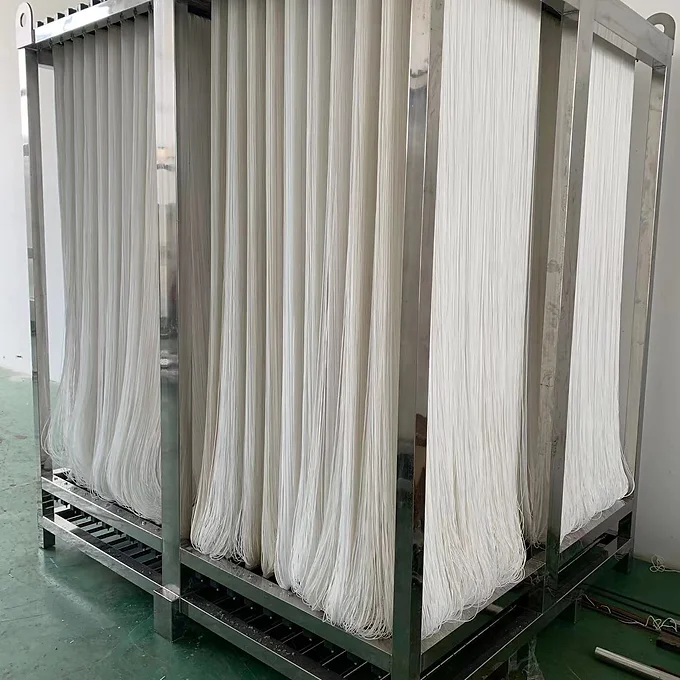
A membrane is a thin material with extremely small pores, used as a fine filter sheet, with pressure pushing the water through those pores.
Water carrying particles smaller than the pores passes through as clean water, while larger contaminants are held back — solids, bacteria, viruses, and heavy metals, depending on how fine the membrane is.
The advantages are that it needs no chemicals, filters continuously, and controls water quality precisely, which is why it is widely used in drinking water systems, wastewater treatment, and water reuse.
Key point:
Pore sizes range from microns (µm) down to nanometres (nm). The smaller the pore, the finer the filtration — but the higher the pressure and energy required.
How Many Types of Membrane Are There, and How Do They Differ?
Membranes for water filtration fall into 4 main types by pore size and filtration capability, and each one removes different contaminants, as follows.
1. MF – Microfiltration (pores 0.1-10 microns)
MF is the least fine of the membranes, used to filter suspended solids, sediment, and larger bacteria, but it cannot yet remove viruses or very small substances.
This type works at the lowest pressure, which saves energy, and it is often used as pre-treatment ahead of an RO system to reduce the load on the main membrane and extend its service life.
2. UF – Ultrafiltration (pores 0.01-0.1 microns)
UF is finer than MF and effectively filters bacteria, viruses, proteins, and colloids, though it still cannot remove salts and ions.
It is therefore popular in MBR wastewater treatment systems for producing water to reuse, as well as in the food and beverage industry — separating proteins or fruit juice, for example.
3. NF – Nanofiltration (pores 0.001-0.01 microns)
NF sits between UF and RO. It filters organic substances and large molecules and reduces water hardness well.
Some salts, such as sodium chloride, can still pass through, so it suits applications that need softer water — boiler systems or cooling systems, for instance.
4. RO – Reverse Osmosis (pores < 0.001 microns)
RO is the finest membrane of all, able to filter out salts, ions, heavy metals, and almost every contaminant, producing water of very high purity. It suits industries that need high-quality water, such as electronics, pharmaceuticals, and food.
Its limitations are that it needs the highest pressure and produces a reject stream (brine) of roughly 20-40%, and it requires good pre-treatment to extend membrane life.
What Is MBR, and How Does It Differ from an Ordinary Membrane?
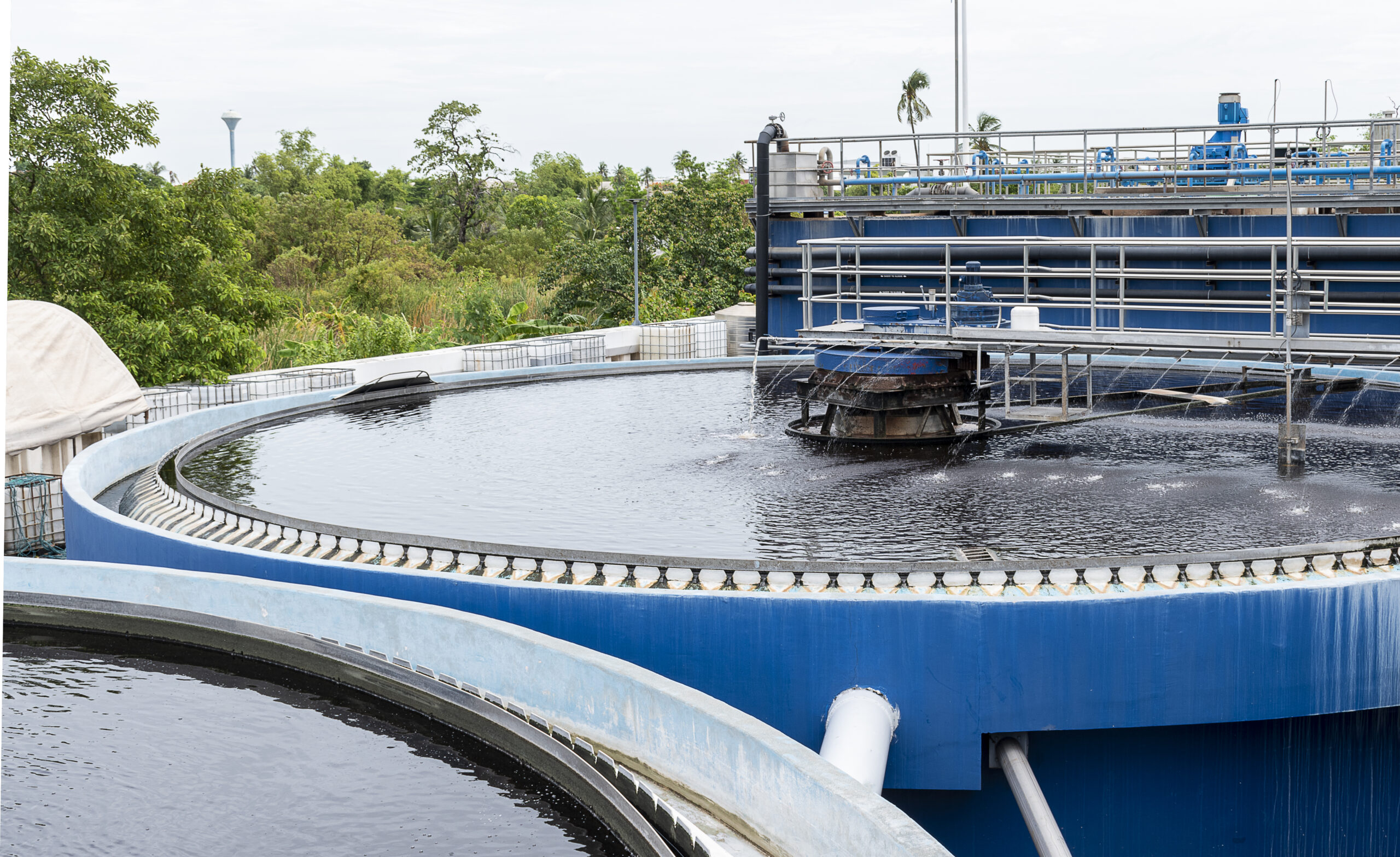
MBR, or Membrane Bioreactor, is not a new type of membrane. It is a system that submerges a UF membrane inside the biological treatment tank instead of keeping it separate. The microorganisms in the tank break down organic matter while the UF membrane draws off only the clear water, producing very clean water without a separate sedimentation tank.
Compared with a conventional activated sludge system, MBR uses over 40% less space, produces water clean enough to recycle, and can handle higher wastewater volumes without building larger tanks. Some Hydrosys customers switch to our MBR membranes to replace expired Japanese-brand units, because we can custom-build the size and fittings to drop straight into the existing system at a lower price.
Caution:
Every type of membrane has a service life, generally 3-7 years depending on wastewater quality and maintenance. Regular chemical cleaning extends it considerably, while letting a membrane foul heavily before cleaning makes it degrade far faster than it should.
Which Membrane Suits Your Factory?
Choosing the right membrane comes down to 3 main factors: the contaminants in the wastewater, the water quality required after treatment, and the budget together with long-term value. Getting these right reduces the risk of a mistaken system design and improves treatment performance.
In general, food factories — whose wastewater carries suspended solids and high BOD — suit an MBR system using UF membranes, since it handles biological treatment and filtration in a single step. Where high-quality reuse water is needed, an RO stage usually follows. For softening duties such as boiler or cooling water, NF or RO can be chosen according to the water quality required and the budget available.
Summary
A membrane is a water filtration technology that uses pressure to separate contaminants from water without chemicals, at levels ranging from MF, UF, and NF through to RO — each with different filtration capability according to pore size and the water quality needed.
Choosing the right membrane means weighing the characteristics of the wastewater, the final water quality, and the budget, so the treatment system performs at its best. Most factories use MBR (UF) for initial treatment followed by RO for reuse, or select NF/RO according to their hardness requirements and the water quality needed in production.
FAQ
Q1: In practice, how do RO and UF membranes differ?
A: RO filters far more finely, including salts and ions, but uses more energy and produces a reject stream (brine). UF filters bacteria and solids well but lets salts through. Choose the one that matches what you actually need to remove.
Q2: How should a membrane be maintained?
A: It needs regular chemical cleaning (CIP – Clean-in-Place) every 1-4 weeks depending on water quality, along with regular TMP (Trans-Membrane Pressure) readings to see whether fouling has begun.
Q3: How long does a membrane last?
A: Around 3-7 years, depending on wastewater quality and maintenance. A membrane fed heavily contaminated water without good pre-treatment degrades much faster.
Q4: Can an old membrane from another brand be replaced?
A: Yes. Hydrosys can produce replacement membranes matching the original dimensions and fittings without rebuilding the whole system, which saves a great deal compared with buying the original brand.
Q5: Which factories suit MBR best?
A: Factories with limited space, those needing high-quality recycled water, or those wanting to reduce sludge production. MBR is a strong fit for food factories, hotels, and plants in areas with strict effluent standards.
If you need a membrane system, or are looking for replacement membranes, Hydrosys offers complete support — design, manufacturing in Thailand, and imports — and we can customise units to fit your existing system precisely.
Learn more at Membrane Wastewater Filtration Systems
☎️ Tel: 02-889-6180, 089-479-8156
🟢 Line: @hydrosys
📬 Email: info@hydrosys.co.th, hydrosys@hydrosys.co.th
📘 Facebook: Hydrosys